Written by: Anna Dickinson-Lomas
You might know it as plastic, but the scientific term is polymer. There are many different types of polymer, which can be categorised as thermoplastics, thermosets and elastomers, depending on how they behave. The different structures within polymeric materials affect the way they respond to heat, for example.
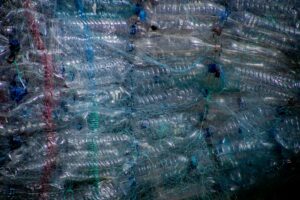
A thermoplastic is a polymer that melts when heated. This behaviour is great for processing, because it can be heated to a liquid to fill a mould, and then it can set hard once cooled. If the component is re-heated, it will melt again. This is very useful when it comes to recycling, but it does mean that these materials can’t be used in applications where it gets too hot, otherwise they will melt.
Examples of objects made using thermoplastics include shampoo bottles, disposable cutlery, and fruit punnets.
 What is a thermoset?
A thermoset is a polymer that does not melt when heated. This is because of the rigid, strong network of bonds within its structure which enables it to rigidly hold its shape without melting when it gets hot. Thermosets are useful in high-temperature applications, such as coating materials or adhesives (glue), because they can withstand higher temperatures without melting. This is useful in a car, where components are glued in place and/or coated for protection from corrosion (rusting).
Examples of thermosets include superglue, electrical wall socket covers and electrical wire coatings.
Thermosets can be much harder to recycle because they don’t melt, so it’s difficult to re-process them.
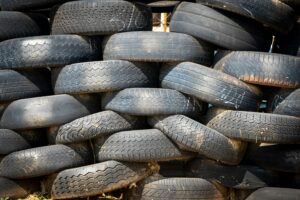
You guessed it! Elastomers are polymers that behave elastically! A common example is rubber (elastic bands, tyres, gloves, balloons etc.). An elastic material is one that returns to its original size after an applied force has been removed. E.g. If you stretch an elastic band as far as it will go, and then release it, it will return to its original size. This is useful for shock absorption in applications such as running shoes or suspension in a car.
Elastomers can actually be classified as thermoplastics or thermosets, depending on its structure and type of chemical bonding. Tyre rubber is a thermoset elastomer, while items such as phone cases or medical tubing are made from thermoplastic elastomers.
So next time you look at something made of ‘plastic’, see if you can have a think about what kind of polymer it might be…
Share this post