

Hao Pei
What is your current programme of study? 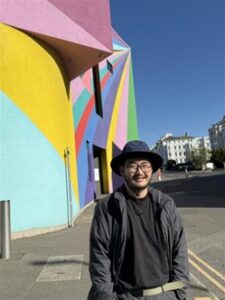
I am a PhD student in Materials Science and Engineering at Imperial College London.
What A-Levels (or equivalent) did you do?
I did not take A-Level courses, but I followed an equivalent academic pathway before entering university.
Why did you chose a career in Materials Science and Engineering (MSE)?
I chose Materials Science and Engineering because it sits at the intersection of physics, chemistry, and engineering. I was particularly fascinated by how microscopic structures—such as atomic arrangements and defects—can directly influence macroscopic properties like strength and durability.
What did you enjoy most about your MSE course?
What I enjoyed most was crystallography, especially understanding grain structures and orientations in metals. I found it very visual and intuitive—almost like art—where patterns and symmetry play a key role.
What is your research about?
My research focuses on hydrogen embrittlement in steels, particularly under cryogenic conditions. I study how hydrogen (and deuterium) interacts with microstructural features such as grain boundaries and defects, and how this affects the mechanical behaviour of materials used in hydrogen storage and transport systems.
What is the coolest thing you have done in your career so far?
One of the coolest things I have done is designing and building a cryogenic experimental system to study hydrogen behaviour at very low temperatures. It was exciting to take an idea from design to a working setup, combining engineering, materials science, and experimental techniques.
What do you see yourself doing in the future?
In the future, I see myself becoming a high school teacher, specialising in science subjects such as physics or materials science. I would like to help students build a strong foundation in science and inspire their curiosity about how the world works.
What is your favourite material (and why)?
My favourite material is stainless steel, particularly 316L. It is widely used in engineering applications and has excellent mechanical properties and corrosion resistance. What I find most interesting is how its microstructure—such as grain boundaries and defects—can strongly influence its behaviour.
What advice would you give your 16 year old self?
I would tell my 16-year-old self to read more, learn more, and spend time understanding what I truly enjoy. Don’t be afraid to try new things, even if they feel unfamiliar at first. Exploring different interests will help you discover your strengths and shape your future path.
Links
Share this post

